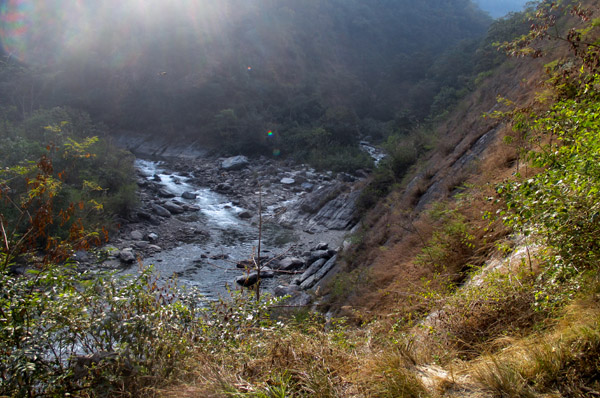
Kathmandu: A comparison between the Department of Hydrology and Meteorology’s real-time hydrological data and long-term seasonal averages shows that most of Nepal’s major rivers are currently flowing below the seasonal average, though still within the normal winter range. This trend, as in previous years, has pushed the country’s hydropower generation toward its winter minimum production level.
During the winter season, reduced rainfall and limited snowmelt typically lead to lower river flows. According to the department’s analysis, the present discharge conditions observed in major rivers within the Koshi, Gandaki, Karnali, and Bagmati river systems are consistent with this seasonal pattern.
River flow and hydropower generation are directly related
Because Nepal’s power generation structure is dominated by run-of-river hydropower projects, a decline in river discharge automatically leads to a reduction in electricity generation. Based on the current flow conditions, most run-of-river projects are generating electricity at levels significantly below their installed capacity.
In particular, hydropower projects under the Koshi river system, as well as mid-hill projects in the Bagmati and Gandaki basins, have seen winter flows decline, causing production to fall below the seasonal average. Although this situation is not unusual, it is considered challenging from a generation–consumption balance perspective.
Reservoir-based projects and system balancing
Because Nepal’s power generation structure is dominated by run-of-river hydropower projects, a decline in river discharge automatically leads to a reduction in electricity generation. Based on the current flow conditions, most run-of-river projects are generating electricity at levels significantly below their installed capacity.
In particular, hydropower projects under the Koshi river system, as well as mid-hill projects in the Bagmati and Gandaki basins, have seen winter flows decline, causing production to fall below the seasonal average. Although this situation is not unusual, it is considered challenging from a generation–consumption balance perspective.
Reservoir-based projects and system balancing
According to the department’s long-term data, river discharge during mid-February to mid-March typically falls to about 30–40 percent of the annual average. Although the current flow conditions fall within this historical trend, they have once again exposed a structural weakness in Nepal’s hydropower system—its heavy reliance on run-of-river projects.
Energy sector experts note that a significant drop in electricity generation even when river flows are at normal seasonal levels indicates an imbalanced hydropower mix.
Outlook for the coming weeks and generation scenario
As no major seasonal weather systems are currently active, there are no signs of a significant short-term increase in river flows. This suggests that hydropower generation is likely to remain around its winter minimum level in the near term. Until widespread rainfall occurs or spring snowmelt accelerates substantially, no meaningful improvement in production is expected.
Today’s Electricity Demand–Supply Snapshot
According to the Nepal Electricity Authority (NEA), total energy demand today has reached 38,716 megawatt-hours (MWh). Of this total demand, supply has been met as follows:
- NEA’s own projects: 5,868 MWh (5.868 million units)
- NEA subsidiary companies: 6,022 MWh
- Private sector producers: 17,986 MWh
- Imports from India: 8,439 MWh
However, NEA data also show that system interruptions equivalent to around 400 MWh were recorded.
Looking at the production structure, more than 24,000 megawatt-hours of the total demand is being met from sources outside the authority—namely the private sector and imports—clearly highlighting the limits of domestic generation capacity during the winter months.
The role of imports remains critical
Current data indicate that as river flows have dropped below the seasonal average, the resulting shortfall in hydropower generation is being compensated through imports. Nearly 22 percent of total demand is being met by imported energy, underscoring the reality that import dependence has yet to decline during the winter season.
Jalasarokar